August 13th, 2010 §
After a worldwide tour that started in 2005 at New York’s MoMA, PIXAR: 25 Years of Animation recently returned home to the Bay Area at the Oakland Museum of California. This is a newly enhanced presentation from the original MoMA exhibit that includes all of the original art plus new additions from Pixar’s latest films: Ratatouille, WALL•E, Up, and Toy Story 3. It features approximately 600 works, of which OMCA’s senior curator René de Guzman proudly admits he has “about 600” favorites.
After reviewing the inspiring exhibition, I could not agree more with the curator. I was completely blown away. Check out my article on PIXAR: 25 Years of Animation on SF Station.

- image courtesy Pixar Studio
July 9th, 2010 §
Prior to becoming a writer/designer/buzz builder, I was all-consumed by a completely different art form. I studied theater and performed off-Broadway in NYC for more than five years when I was younger. A decade later, I’m finally able to put that dormant talent to some good use. As a contributing Arts Writer for the San Francisco online lifestyle city guide, SF Station, I had the fantastic opportunity to review the hilarious musical, Young Frankenstein. Check out my theater review HERE.

image courtesy Golden Gate Theater
February 22nd, 2010 §
Preface: This article offers tips and advice for both graphic design firms and the businesses seeking to hire them. Although the focus is on San Francisco graphic design firms (a city bursting at the seams with a slew of graphic design firms and freelance designers), the contents are universal and beneficial to all geographic locations.

In my previous article, How to get graphic design and copywriting clients, I interviewed three top creative firms and asked them all the nitty-gritty details on how to generate new business. Then I got to thinking…how great would it be to have just a few minutes of the clients’ time to pick their brains on how they find and choose us?
Choosing a graphic design firm can be a daunting process. Offering fantastic first-hand perspective on the process are: Marco Zappacosta, co-founder and CEO of Thumbtack an online marketplace for local services; Lauren Schiller, co-founder of the weekly San Francisco radio show, Lady Brain; and Tex Dworkin, Director of Social Media for Global Exchange. Moderated by San Francisco graphic designer / writer, Stephanie Orma of Orma Design and She’s SO Creative, the three share their experience, advice, fears, and turns-off in selecting a design firm. This is an honest, eye-opening discussion that every designer-seeking-client must read.
1. In a nutshell, please describe your business.
Zappacosta: Thumbtack is an online marketplace for local services (think eBay for services).
Schiller: Lady Brain is the most candid advice show on San Francisco radio. My partner Steph and I cover topics so personal, you may have thought they could only happen to you. We air on KUSF 90.3 FM. Our weekly show is also available through iTunes and on our website, askladybrain.com.
Dworkin: I sit on the board of the Fair Trade Resource Network and Fair Trade Federation Fundraising committee. These organizations are networks/resources for Fair Trade, socially responsible businesses in the U.S.
2. Why were you in need of a designer?
Zappacosta: When we started Thumbtack, we didn’t have any design capabilities in-house, but knew it would be key to building a good service. So we decided to hire an outside firm.
Schiller: When we first launched the show, we knew we needed to grow our online presence to support podcast downloads and get the word out to ladies everywhere about Lady Brain. We have ablog and Facebook page, but needed a home for our brand online. We also wanted to represent ourselves as a legitimate broadcasting presence, not just another podcast.
Dworkin: We were seeking a designer to design a new calendar that would be sold in retail stores as a fundraising tool for our organization.
3. How did you go about finding a designer?
Zappacosta: We set about the search mainly by mining blog posts and lists of “best SF designers.” We didn’t post any Craigslist ads because we’d heard of people getting inundated with crap. After creating a list of potential candidates, we did a deep dive into their portfolios to identify whether we liked their style and whether they’d ever attempted a project like ours.
Schiller: Because I have a background in marketing and advertising, I knew of a handful of good design firms in the city that I had worked with in the past, or came recommended. I reached out to my network for recommendations and met with the designers whose aesthetic I shared.
Dworkin: I used Google in combination with design firms I already knew about, as well as advice from co-workers. Once I had a list of possible firms, I emailed each one individually. I then spoke on the phone with the leading contenders to explain the project and get a feel for whether they would be a good fit for the project.
4. Was the search to find a designer difficult?
Zappacosta: Yes! In the end, I feel like we got lucky. First, it’s hard to know what’s out there. Second, it’s hard to evaluate what you’re seeing. And finally, it’s hard to get into contact with everyone (we didn’t hear back from all the designers we contacted).
Schiller: Because of my past experience in the industry, I was able to find a number of qualified designers and agencies relatively quickly. Although there are many talented designers, the more difficult task is finding the right agency: one that can meet your time frame, budget, quality standards, and understand your audience and the role of your website – and can present a creative vision.
Dworkin: It was time consuming. It was very important to find the right design firm to do this project, one that was values-based and would be able to address the tastes of our target audience. I was surprised that one firm that came highly recommended actually took weeks to get me a quote, as well as the info they said they would send. It really turned me off and I did not go with them for obvious reasons.
5. How many responses did you get/have options to choose from?
Zappacosta: In the end we had 4 phone calls and 3 in person meetings.
Schiller: Because I narrowed the list down first, I took bids from a few agencies and met with each to discuss their capabilities and credentials.
Dworkin: From those I contacted, the majority responded, although in some cases, surprisingly not very fast. The speed at which they responded definitely affected my decision. I finally narrowed it down to 3 firms and made my final decision after seeing a sample of a very similar project to mine in the winning firm’s portfolio.
6. When you looked at the designers’ portfolios, what exactly were you looking for? And was it hard to assess if they would be a good fit for you?
Zappacosta: Because of what we were trying to build we went looking for designers that had built interactive websites. It’s one thing to create a good-looking design but another to create an intuitive one. The hardest part about evaluating designers’ work is trying to figure out exactly what they did. Often, and especially if the project they did was big, there were collaborators and/or other consultants, making it hard to identify exactly what the designer in question brought to the table.
Schiller: It’s important for the agency to understand whom they’re building a site for. Having a great design sense is only the beginning – if the website doesn’t speak to its audience, it doesn’t serve its purpose. So in looking at portfolios, I tried to understand the nature of each business and assess how the final site spoke to their audience and communicated their message and whether they’d be able to provide a customized experience.
Dworkin: I immediately looked for similar projects and quality. Seeing samples in person made it very easy to determine which would and wouldn’t be a good fit for my project.
7. What were the most important factors in choosing a graphic design firm?
Zappacosta: The most important factor for us was a firm that could take us through the entire process of conceptualization, mock-ups, design, and coding. We really needed all of it from one group.
Schiller: Cost was definitely an issue – we didn’t have a big budget. But having someone who understood our concept and was able to not only design something we liked, but come up with new, fresh ideas for presenting our brand online was key.
Dworkin: In order of priority, the deciding factors were: cost, quality, similar project, and speed of response.
8. What were your biggest fears in hiring a graphic design firm?
Zappacosta: The biggest fear is thinking that you’ll get too far along in the process before you realize you’ve hired the wrong person. The designer ultimately controls how your clients or customers see your product – it’s a huge responsibility.
Schiller: You never know what the final product is going to look like. So I think the biggest fear is always “Will I get what I paid for?” and “Will it work to accomplish my goals?” “Will I like it?”
Dworkin: Our biggest concern was that our deadlines would be met. With this project being a calendar, we really needed to stick to our timeline.
9. Were you happy with the outcome? Anything you would have done differently?
Zappacosta: We selected Project6 Design and were quite happy with what we got:www.thumbtack.com One thing we didn’t quite handle correctly was how to deal with post-project edits and improvements. Being a start-up, we’re constantly changing, and I think we could have been clearer from the get-go how this phase of the relationship would go.
Schiller: We love our site designed by Veneer Studio. With the move to broadcast radio from strictly podcasting and the combination of social media and grassroots growth, it’s doing a great job supporting Lady Brain. They definitely got our sense of humor and kept it simple.
Dworkin: We were happy with the calendar (not shown) that Design Action Collective, created for us. Looking back, I would have allowed more time in our own timeline for the entire design process. You can only do so much to move the timeline forward on your end.
(originally appeared in SF Examiner 02/22/10)
January 23rd, 2010 §
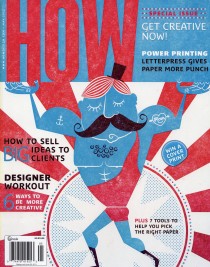
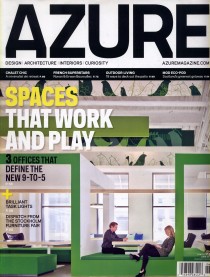
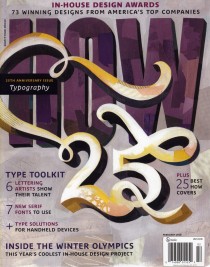
The February 2010 issue of HOW magazine is currently on newstands and in bookstores all across the country. The article I wrote, “Turn Downtime into Playtime” features the awesome work by design firms Flywheel Design, Brand Engine, and graphic designer France Liddell.
DOWNLOAD & READ STEPHANIE ORMA’S ARTICLE (the PDF is 8.9mb so download time is a little slow – but SO worth it!)

January 13th, 2010 §
If you missed Live From the Left Coast’s radio discussion on typography this past Friday, October 30th, you can still catch the lively, informative, and humorous discussion via their Podcast. Host Angie Coiro discusses typography and its impact on our daily lives with Tom Ingalls, founder of Ingalls Design and Professor of Graphic Design at the California College for the Arts, Dave and Holly Combs, of PEEL Magazine and creators of the movement to Ban Comic Sans, and myself, designer/writer Stephanie Orma of Orma Design and She’s SO Creative.
Would love to hear your comments and thoughts on the typography show.

January 13th, 2010 §
I have a love/hate relationship with typography. Love in the sense that I am so passionate about the craft, I’ll stay up night upon night tweaking the type in a design so it’s just right. Hours will fly by, darkness will turn to dawn, but I won’t have cared or noticed because the type is all I see. Love in the sense that when I spot gorgeous typography, I simply cannot stop staring at the awe inspiring, drool-worthy brilliance. But typography is also my chief nemesis. It’s not a skill that comes naturally to me. And some days it feels like a constant uphill battle. It’s frustrating, it’s maddening, and probably even more so because of my fervent passion for the craft.
Typography is arguably the single most challenging element in graphic design to master, and likewise, the most crucial. The designers I have interviewed today are champions of typography and frankly, my personal design heroes. Their mastery of working with type is nothing short of downright enviable: Aya Akazawa, senior designer of Chronicle Books and sole designer of Souffle by Le Petit Graphiste; Todd Hedgpeth principal and creative director of Tawd Design and graphic design instructor at Academy of Art University; John Barretto art director and senior designer of Tolleson Design; Max Spector, art director and senior design of Chen Design; and Josh Chen, principal and creative director of Chen Design. Moderated by San Francisco graphic designer and copywriter Stephanie Orma of Orma Design and She’s SO Creative, the five acclaimed designers talk good type / bad type and share insightful tips for newbie designers to seasoned professional alike seeking to master the art of typography.

READ FULL ARTICLE: SF EXAMINER
January 13th, 2010 §
For the creative industry, in which 99.9% of the time is spent interacting with a computer, it seems ironic that the success of the business itself is so vitally dependent upon the real and meaningful interactions with people and NOT computers. What does this mean exactly? It means we (graphic designers, copywriters, creatives, etc.) have to actually venture out beyond the glow of the computer monitor to obtain clients. But don’t take it from me.
I picked the brains of three stellar creative firms who know a thing or two about getting clients and building successful businesses: Jennifer Bostic, owner and creative director of Paper Plane Studio; Lanny Udell, owner and chief writer of Copywhiz; and Eric Heiman and Adam Brodsley partners and co-founders of Volume Inc. Moderated by San Francisco graphic designer and copywriter Stephanie Orma of Orma Design and She’s SO Creative, the three studios share their personal experiences, insights, and advice on the best means of landing graphic design and copywriting clients.

READ FULL ARTICLE: SF EXAMINER
January 13th, 2010 §
I recently went to a design lecture at Sacramento State University in which renowned graphic designer Kit Hinrichs discussed his 40+ year career including working at the prestigious design firm,Pentagram. During the question and answer period, a young designer working as an “in-house designer” (a.k.a. working in the design department of a particular company rather than for a design agency itself) asked Kit’s advice on the best way to grow and improve as a designer. Kit’s (rather blunt) answer was “don’t do it [in-house design].” He elaborated that, in his opinion, working for a top-notch design firm surrounded by the best of the best, learning, absorbing, and working your tail off is the optimum means to hone and refine your skills.

That’s all well and great, but how exactly does one go about working side-by-side with the most talented people in the design industry? And do you really need to give up your right arm or first-born child to get in the door? To help shed some light on the subject, I interviewed some of my favorite San Francisco graphic design firms (selectively chosen for producing a body of work that is at once conceptually brilliant, typographically amazing, and aesthetically gorgeous): Joel Templin and Katie Jain of Hatch Design; the current president of AIGA SF, Brian Singer of Altitude; and president emeritus of AIGA SF, Christopher Simmons of MINE™. Moderated by San Francisco graphic designer and copywriter Stephanie Orma of Orma Design and She’s SO Creative, the three design firms share insightful tips and advice for newbie design grads to seasoned professional alike seeking to get in the doors of the most prestigious design firms in the country.
What are the top qualities you look for when hiring a graphic designer?
Hatch Design: We look for designers whose talent it is to develop conceptual solutions to a problem all the way through to formal execution. So it’s not only big-picture thinking, but typography, illustration and knowledge of different production techniques that matter.
Altitude: Talent. Passion. Personality. Not necessarily in that order.
MINE™: In a portfolio I look for several things: First and foremost, I’m looking for a point of view. That is, I want to see a unique perspective in the work that distinguishes it from the work of others. Anyone can solve a problem formally, but if all you bring is style I’m not really that interested. The most compelling portfolios are those that demonstrate the designer’s unique thinking, as well as their technical skill. I also take particular note of typography skills — type is almost always the Achilles’ heal of the portfolio. Extraordinary type skills are essential to design, and are especially important in our studio. Because we do a lot of logo and identity design, I look for those projects as well. Identity projects tell me a lot about a designer’s thought process, drawing skills, color sense and typography. I look for designers who can write. I look for confidence, but I expect humility.
Other than the designer’s portfolio, what other things weigh heavily on your hiring decision?
Hatch Design: Our hiring decisions are based on 3 main components. The first being the portfolio and quality of work, which should demonstrate the qualities mentioned above. But being a small-sized studio, personalities also matter a lot! We have to know that a designer is a good fit within our studio and that they have a willingness to work hard and pitch in on any project. The interview is a very important way of discovering this fit. And finally, since designers often interact with clients directly, communication skills are very important–the ability to craft written communication and articulate the thinking behind a particular design solution are invaluable assets–not only for working at Hatch, but for a designer’s entire career.
Altitude: Strangely enough, many designers’ portfolios look the same. This is actually true of most design firms too. When it comes to making a hiring decision, the work needs to be excellent, but it comes down to many other factors. The ability to articulate concepts. Personality. Is this someone we want to spend 40+ hours a week with? Availability. Affordability. Timing is strangely important. We had an informational interview set up with a recent graduate for a Friday morning. Thursday afternoon, we landed a sizable project. Guess who started work on Monday?
MINE™: If there is one thing I’ve learned over the years, it’s to hire on personality, not talent. Whoever I hire, we’re going to have to work together every day. We’re going to trust each other’s opinions, respect each other’s ideas, style and work ethic, etc. There are tons of talented designers out there, but only a handful that are suited to our work environment, the kinds of clients we have, the pace we keep up, and (frankly) my personality.
When you are seeking to hire a new designer would you post an ad on CraigsList, AIGA job board, or ask a colleague for word-of-mouth referral?
Hatch Design: We have the best luck finding a new designer either through word-of-mouth referral or from someone sending in their portfolio…we’re always looking for and open to hiring exceptionally talented designers, so waiting for a job posting wouldn’t be a good idea if you really want to work at Hatch.
Altitude: Our first approach is to use our network (word-of-mouth) and there is nothing better than a personal referral. After that, we’d use the AIGA job board or Creative Hotlist.
MINE™: It’s almost always word of mouth. On average, we also get a 2-3 inquiries a day from people interested in designing or interning for us. I personally look at every portfolio we receive. Many of them are pretty poor or just not a good fit for us. Many, though, are really impressive. When we need to hire a designer or intern or freelancer, I’ll refer to the books we’ve already seen, and put the word out to a few trusted colleagues. I think its better to focus the search on a narrow selection of pre-qualified people then to cast the net indiscriminately wide.
If you did post an ad on CraigsList seeking a designer, what are some immediate cover letter indicators that the designer is or is not right for your firm?
Hatch Design: Honestly, we evaluate the typography of the cover letter first! Then, we’ll want to make sure that the candidate has an understanding of us and our work – that it is not just a form letter sent to hundreds of firms.
Altitude: A form letter or generic response is the first indication that a person isn’t serious. If you expect us to take the time to review your work, formulate an opinion, and be able to discuss it with you in an interview, please have the same consideration for our work. With the number of people sending us their work (even when we’re not hiring), a form letter is a sure way to disqualify yourself.
MINE™: I recently received an email “cover letter” from a young designer who was eager to work at our firm. I noticed in the “to” that he had CCed 55 other designers. I wrote him back stating simply that if he wanted to stand out from the crowd he should begin by not addressing prospective employers as a herd. I also CCed the group. I’m sure that was an embarrassing lesson for him, but hopefully one he’ll take to heart. A good cover letter is personal. It’s brief, but it takes the time to demonstrate that the prospect is hoping to work for/with one specific firm. It can be as simple as saying, “I really admire the work you did for ________.” For extra credit, you might go on to say why. We all know that you’re sending very similar letters to other firms as well, but everyone likes to be treated as though they are special. The letter should also state your ambition with the firm (i.e. what you hope to contribute and what you hope to learn). It should be professional, but demonstrate some personality, without being gimmicky. It should be spelled correctly (we are MINE™, not MineSF) and it should be addressed to someone (not “Dear Hiring Manager”). It should be well typeset.
What are some things designers do during the interview process that turn you off?
Hatch Design: The only thing that could be a real turn-off is, going back to it, lack of communication skills. If someone sends in a great portfolio then isn’t able to explain and articulate the thinking behind their work, once we meet in person, it can be a bit of a let-down!
Altitude: Being late. Chewing gum. Knowing it all.
MINE™: Chewing gum. Not turning of a cell phone. Checking a text message. Not listening. Making disparaging remarks about anyone. Also, we don’t wear shoes in our office. I think it’s pretty obvious when a person comes in and sees all the shoes lined up that that’s our custom. I wouldn’t say it’s a turn off when a visitor doesn’t remove their shoes, but I like people who are perceptive.
Do you look for designers that have web programming skills as well as design skills?
Hatch Design: Yes. Web skills are not a must-have, but certainly could be the deciding factor between two equally talented designers.
Altitude: When we hire designers, it’s great if they have some experience with the web, but we don’t expect them to be programmers. Just like when we hire programmers, it’s great if they’ve got a good design sense, but we’re usually not hiring them to do design. It’s hard to find people who can both design and program well, though, they’re out there.
MINE™: No. But I wish I did. Usually we sub out the programming phase of our more complex web projects.
How important is it for your selection whether the prospective designer has been featured in design annuals, won awards, etc.?
Hatch Design: This is not very important to us – we base our decisions on the quality of someone’s work, whether publicly recognized or not.
Altitude: An award or annual may create an awareness of a prospective designer, so in that respect, it’s important for increasing visibility. But, if it comes down to winning an award, or being able to articulate your design solutions, We’ll take the articulate designer every time.
MINE™: It’s not really important. Even our own awards we just keep in a drawer.
How important is where the designer went to school or if they’ve worked for other prestigious firms?
Hatch Design: Again, it’s all about the design work – not the name on the diploma or resume. We believe you can create outstanding work at a relatively unknown studio or school and still be very successful in your career.
Altitude: The school doesn’t really matter. That said, some of the better schools graduate a higher percentage of students with talent, and, some have wider ranging connections for placement upon graduating. As for previous experience at prestigious firms, I think that helps in two ways. First, it shows that you come to the table with some experience (hopefully good experience) under your belt. Second, it almost pre-qualifies you. It shouldn’t, but it does. It’s hard to look at a resume with internships at Volume and Office, and not want to interview the person.
MINE™: This depends. I teach at the California College of the Arts (CCA) and I studied there too, so I’m very familiar with the curriculum there. I happen to prefer the philosophy at CCA, and if an applicant graduated from CCA I know what it means that they studied under Bob Aufuldish or Jeremy Mende, Emily McVarish, or whomever. Similarly, if an applicant worked at SVA or for Cahan orMichael Vanderbyl, I know what that means. Ultimately, though, it’s about the individual and how they fit into our small, tightly knit team.
How do you like designers to follow up with you after the interview process?
Hatch Design: The follow-up can be very important. As we get busy and move on to other projects, a polite reminder from a designer is sometimes what we need. And it shows great initiative on behalf of the designer.
Altitude: Gentle persistence.
MINE™: I think a handwritten note goes a long way. A follow up email is ok too. The Thank You note is a dying art and one which I still appreciate.
What advice do you have for designers that want to work for your firm?
Hatch Design: Put together a beautiful portfolio – PDF is fine – which clearly shows your work and send it in.
Altitude: Bring it. Other options include: Fix the economy and we’ll talk. And bring something besides design to the table. One of our last hires wasn’t a designer at all, but an artist with a lot of printmaking experience.
MINE™: It depends why they want to work for us, but in general I’d suggest the same for us as for anyone: Get to know our work, our thinking, our clients. It’s easy to find our work in annuals, and you can Google up interviews and features, etc. pretty easily too. I speak a few places a year, so it wouldn’t hurt to show up to one of those events and introduce yourself. I’m still in contact with a number of people I’ve met at a lecture or portfolio review. We haven’t hired any of them yet, but I’ve recommended some of them for freelance work from time to time. The point is, we have a relationship. We’re getting to know each other over time and if something opens up they’ll be top of mind. Of course, they’ll probably be settled in great jobs someplace else by then.
What is the best way you have found to hone and refine your own design skills?
Hatch Design: We believe in a very collaborative work environment – often everyone in the studio will help brainstorm solutions for a new project, so we’re always learning from each other and building off one another. We also continually search for and collect interesting design ephemera, which goes to our ever-expanding design library and serves as inspiration for our design projects.
Altitude: By exploring things other than design.
MINE™: Work. Look. Read. Listen. Discuss. Share. Repeat.
(originally appeared in SF Examiner 4/15/09)
January 13th, 2010 §
With 13,297 Twitter followers combined, the following graphic designers know a thing or two about using Twitter to effectively promote their design businesses: Lawrence Anderson(twitter.com/hellolawrence), a San Francisco graphic designer at Designed By Anderson; Jacob Cass(twitter.com/justcreative), an Australian freelance graphic, web, and logo designer at Just Creative Design; and Grace Smith (twitter.com/gracesmith), a United Kingdom freelance web and blog designer at Postscript5. Moderated by San Francisco copywriter and graphic designer Stephanie Orma (twitter.com/stephanieorma) of Orma Design, the three designers share their personal Twitter experience, tips, and advice including how to get Twitter followers and land design jobs.

READ FULL ARTICLE: SF EXAMINER
January 13th, 2010 §
When running a one-man show as a self-employed creative (artist, graphic designer, illustrator, photographer, writer, etc.), how we prioritize our time is of the utmost importance to the success of our business. When the economy is good, our days are spent juggling “the creative side” with all the other tasks of keeping the company afloat. But when times are slow, like now, an imbalanced portion of our time is spent on promotion. This, of course, is an absolute necessity. But with a significant portion of time spent marketing via Twitter, FaceBook, LinkedIn, blogs, online discussion groups, sending out direct mailers, emails, and the like, at what point do we take a break from all this promoting and start creating again?

Clever new card created for my greeting card company She's SO Creative. Photo Courtesy Stephanie Orma / She's SO Creative.
For my greeting card business, She’s SO Creative, I certainly find myself struggling to justify time spent on creating new cards when business is slow. Do I create new products when I still have a fair amount of unsold inventory or do I just hold off and wait for the storm to subside? Retailers need fresh inventory in their stores because customers will stop coming if they see the same old products day in and day out. And retailers won’t buy from manufacturers if they having nothing new to offer.
Along the same lines, how do we as commercial artists grow our talents in a sluggish economy, if we’re not gaining new clients? Taking on new projects challenges us, keeps our skills sharp, and feeds our creative souls. And those entities are the bread and butter of our business. Plus, creating new work adds another project to our portfolio; an extremely vital element as it’s the actual tangible item that sells our services.
Whether we create a new project in a graphic design or illustration class, take on a non-for-profit client, or write a magazine article on spec, this is our livelihood and we need to keep moving forward. I absolutely believe we should be spending a large portion of our time promoting our services and drumming up new business. But I think it’s equally important to dedicate a certain portion of our day, our week, our lives to creating. In fact, I’m cutting this article short to start working on some new greeting cards right now!
(originally appeared in SF Examiner 3/30/09)